
Variance is not a spreadsheet problem. It is a trust problem. When actuals and forecasts drift from the plan without a clear story, meetings turn into debates and confidence slips. The work suffers.
SVA helps teams understand variance with clarity - what moved, how far, and what it means for delivery. It is about focus. Less noise, more signal, and a path to action everyone can agree on.
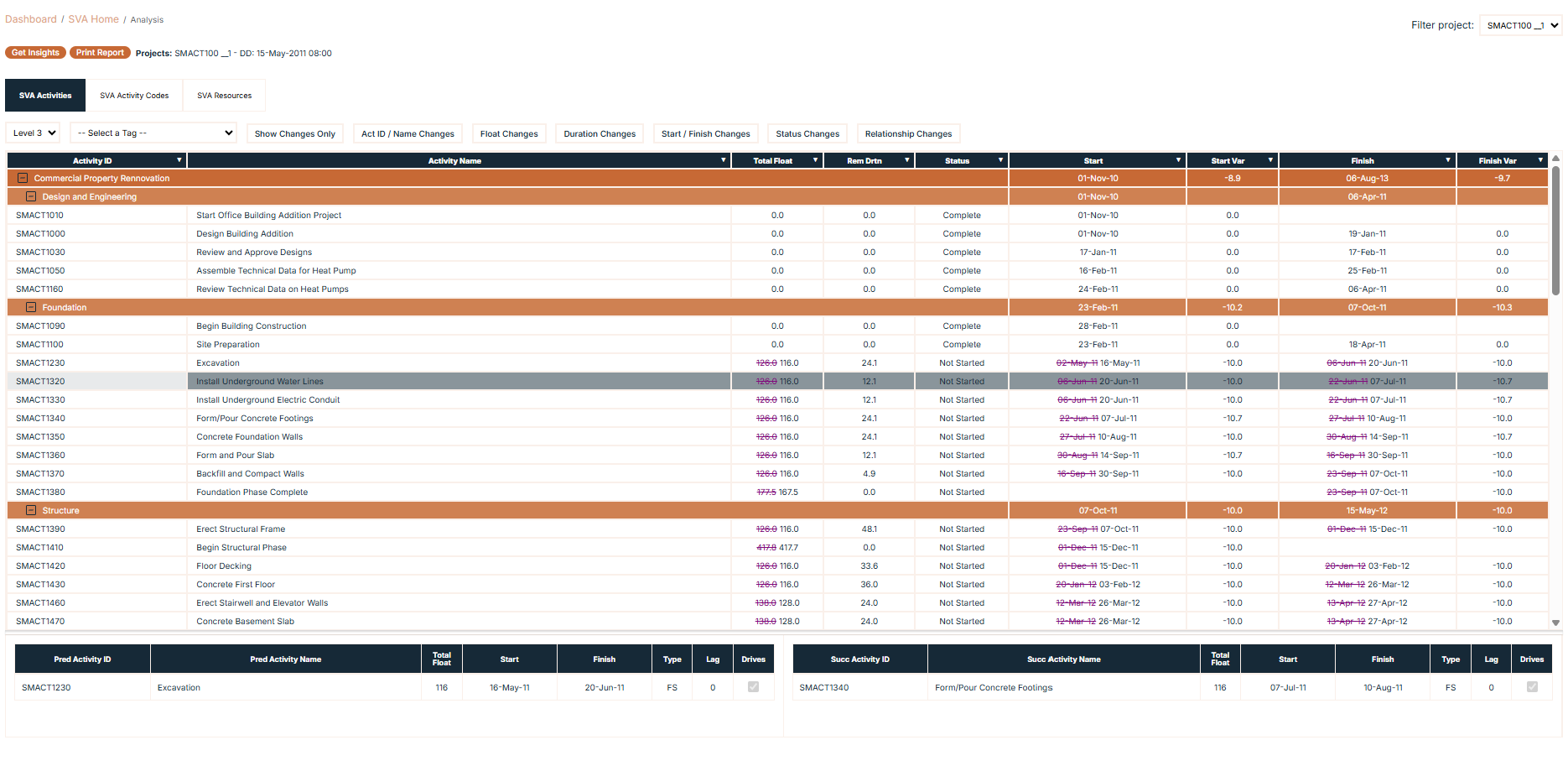
Plan versus actual should be simple. But once updates, re-sequencing, and rolling wave detail land, the story gets muddy. People argue about snapshots and screenshots instead of the substance of change.
SVA frames variance so the team can move quickly from “what happened” to “what now”. It makes the story legible and repeatable, update after update.
| Task | Old approach | With SVA |
|---|---|---|
| Understand change | Manual diffing and screenshot hunts | A single read on what moved and why it matters |
| Agree next steps | Long discussions without closure | Actions, owners, dates captured on the spot |
| Maintain confidence | Inconsistent narratives across updates | Consistent, repeatable read of variance every cycle |
Variance will always exist. The difference is whether it erodes trust or builds it. SVA helps teams move with clarity and discipline - fewer surprises, tighter meetings, faster decisions. Over time, that discipline compounds into delivery confidence.